Women in Prison
About Women in Prison Films
Women-in-prison is one of exploitation cinema's clearest carceral fantasies, and it matters on CaSTV because horror has long borrowed from the same machinery of confinement, punishment, surveillance, and bodily humiliation. The tag identifies a specific cycle rather than a general prison setting: films centered on women's incarceration, institutional cruelty, forced hierarchy, and the commodification of discipline as spectacle. The category is not automatically horror, but it sits so close to horror's interests in enclosure and violated bodies that the overlap is constant and historically important.
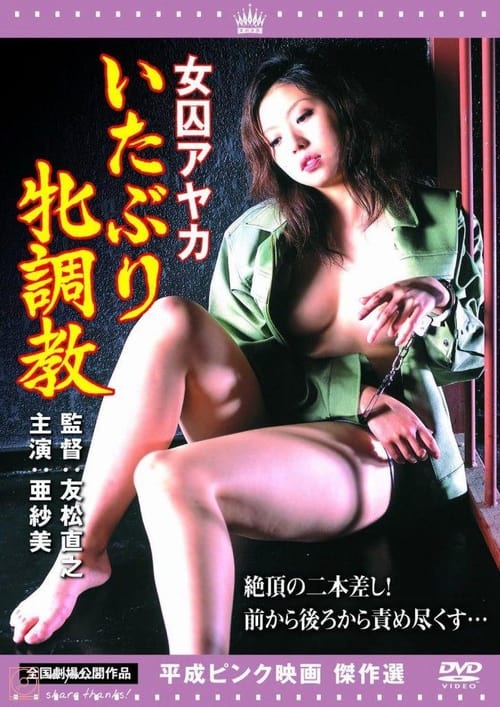
The structure is usually brutal in its simplicity. A woman enters an institution that claims legal or moral legitimacy and discovers a regime of abuse beneath the official order. Guards, wardens, doctors, matrons, trustees, or inmates enforce hierarchies through violence, coercion, exposure, and ritual humiliation. Horror benefits from this immediately because the prison is already a haunted-house logic stripped of pretense. The doors lock. Escape routes are controlled. Authority is predatory. Ordinary time is broken into punishment cycles.
This is why women-in-prison sits near Exploitation, Sexploitation, Nazisploitation, Thriller, and Horror. Exploitation supplies the commercial apparatus. Sexploitation often shapes the gaze, especially in films that turn captivity into voyeuristic spectacle. Nazisploitation shares the logic of uniformed sadism and institutionalized degradation, though the historical specificity differs. Thriller contributes escape, uprising, and procedural danger. Horror intensifies everything by making the institution feel like a system designed not only to confine bodies, but to metabolize them.
National traditions matter because the category has appeared in many production contexts with different emphases. In the United States, women-in-prison films often intersect with grindhouse economics, anti-authority fantasy, and sensational depictions of corrupted state power. In Italy, the cycle frequently becomes more lurid, sadistic, or visually stylized, fitting comfortably inside broader Eurocult exploitation traditions. In Philippines and other international exploitation markets, the form could take on local political textures while preserving the same commercial interest in carceral spectacle.
The body is central in the most literal way. Uniforms, showers, searches, restraints, punishment devices, medical abuse, overcrowding, injury, and exposure all organize the image. This is why the category often brushes against Body Horror or Gore when violence escalates, though the more consistent logic is disciplinary rather than transformative. The horror lies in being made permanently available to an institution's gaze and appetite.
At the same time, women-in-prison films are often about social performance. Roles harden quickly under confinement. Some people collaborate, some resist, some survive by negotiation, some become miniature tyrants once given a sliver of delegated power. The prison becomes a compressed society, and horror frequently emerges from how fast it teaches cruelty as procedure. This gives the category an underappreciated relation to Psychological Horror, because institutions do not only injure bodies. They reshape perception, shame, and self-understanding.
The best and worst aspects of the category are often inseparable. Women-in-prison films may expose state violence, carceral misogyny, and sexual coercion, but they may do so while profiting from the very spectacles they claim to condemn. That contradiction is not incidental. It is part of the form's history. CaSTV should preserve the label precisely because it names a cycle where critique and exploitation are frequently entangled rather than cleanly separable.
For viewers using the database, women-in-prison should signal films where female incarceration and institutional punishment are structurally central, not merely background detail. It belongs beside Exploitation, Sexploitation, Nazisploitation, Thriller, and Horror because those neighboring tags explain whether the film leans toward carceral spectacle, sadistic authority, escape suspense, or full genre nightmare.
Women-in-prison remains important to map because it reveals one of exploitation cinema's most persistent obsessions: the institution as a theater of domination. Horror has always understood that locked spaces generate dread. This cycle shows what happens when the locked space also becomes a marketplace of punishment, shame, and looking. The result is often ugly, sometimes revealing, and historically impossible to ignore.