
Seville European Film Festival
The Seville European Film Festival, founded in 2004, is the only major Spanish film festival whose program is dedicated exclusively to European cinema, making Seville - a city better known internationally for flamenco and the Alcazar than for film - an unlikely but genuinely distinctive destination on the European festival circuit.
Held each November in the Andalusian capital, the festival was established to fill a gap in Spanish film culture by concentrating attention on the diversity of European production rather than competing with San Sebastian or Malaga on broader international ground. The focus is strict: features, documentaries, and shorts submitted to the main competition must be European productions. This constraint has shaped the festival's identity and given it curatorial coherence, drawing programmers and critics who specifically want to track currents in European filmmaking across a single concentrated week.
The festival is accredited by the International Federation of Film Producers Associations (FIAPF) as a non-specialized competitive festival, which places it within the recognized hierarchy of European events. Its main competition, the Golden Giraldillo, is awarded by a jury that changes each edition and has included directors, critics, and producers from across the continent. The award takes its name from the Giralda, the Moorish tower that stands at the center of Seville's old city and is the most recognized landmark in Spain.
The programming extends well beyond the competition. Retrospectives, country focuses, and thematic sidebars have been consistent features of the Seville program. The festival has organized surveys of national cinemas that rarely receive dedicated attention in Spain, including Eastern European countries whose output reaches Spanish audiences mainly through this event. These sidebars have included retrospectives of directors working in thriller and crime genres, particularly from Central and Eastern European traditions where literary genre cinema has produced some of the continent's most formally accomplished work.
Seville's venues are a significant part of the event's character. The Teatro Lope de Vega, a 1929 theatre that functions as the festival's main ceremonial space, and the multiplex Cinesur Nervion Plaza provide a contrast between historic grandeur and modern theatrical capacity. Outdoor screenings in the city's plazas during warm November evenings have become part of the festival's atmosphere, drawing audiences who would not normally attend programmed film events.
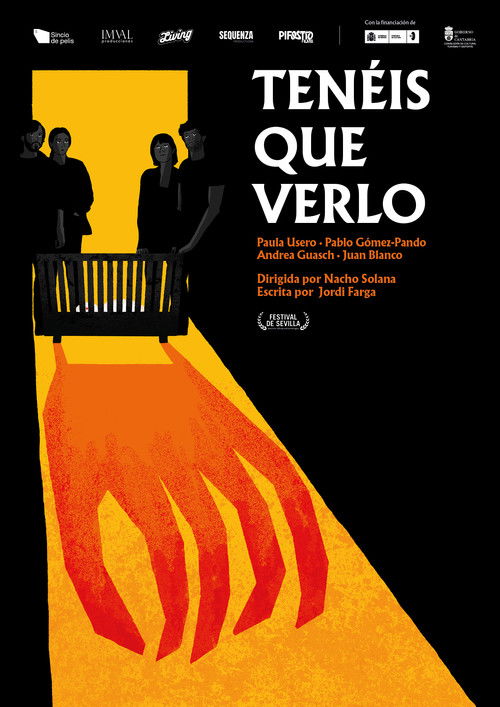
The festival has made a deliberate effort to include genre and genre-adjacent work from European directors. Horror and psychological thriller films from French, Spanish, Polish, and Romanian directors have screened in sidebar programs, reflecting the health of genre production across the continent. Spain's own genre cinema tradition, which runs through the work of directors like Amando de Ossorio and Narciso Ibanez Serrador into contemporary work, is periodically honored through retrospective programming.
The industry dimension of the Seville festival is less developed than at Cannes or Berlin but is not absent. Co-production forums oriented toward European partnerships have been held alongside the screenings, and the festival's accreditation means that awards carry weight with distributors across the continent. Spanish distributors have historically used Seville as a preview ground for European acquisitions intended for the Spanish market.
The festival's November timing places it late in the autumn calendar, after the main festival rush of September and October has passed, which means programmers and buyers who attend Venice, San Sebastian, and BFI London often continue to Seville to catch European films that were not programmed at those earlier events. This positioning has given Seville a secondary-market role that suits its budget and scale.
As a record of what European cinema produces in a given year - including its thriller, experimental, and genre dimensions - the Seville European Film Festival has established itself as a reliable and professionally respected institution in a country where European co-productions are an important part of the theatrical landscape.