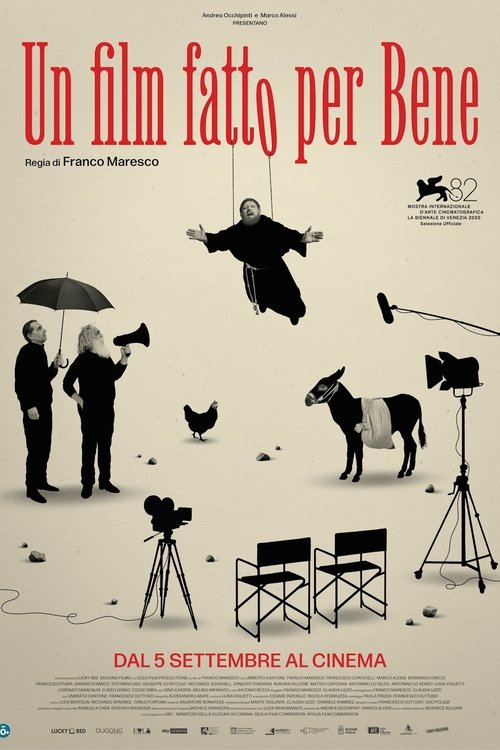

The Venice Film Festival is the oldest film festival in the world, established in 1932 as part of the Venice Biennale, and it introduced the competitive film award model that every subsequent major festival has emulated in some form.
The festival takes place each August and September on the Lido, a narrow barrier island in the Venetian Lagoon in northeastern Italy. The main venue, the Palazzo del Cinema, was purpose-built in 1937 on the beachfront and remains the symbolic center of the event, flanked by the Sala Darsena and a series of ancillary screening spaces across the island. The combination of the setting, the season, and the concentration of international press gives Venice a particular atmosphere - competitive, humid, and historically dense - that distinguishes it from the northern European festival circuit.
The Golden Lion, the festival's top prize, is among the most prestigious awards in cinema. Since 1980 it has been awarded by an international jury, and its recipients form a notable timeline of world cinema history. Films that win or compete in Venice regularly shape subsequent release trajectories and awards campaigns. The festival also awards the Silver Lion for directing, the Grand Jury Prize, the Special Jury Prize, and the Volpi Cup for acting, among a range of other citations.
Venice's principal competitive section is the main Competition, but the festival structure includes several key parallel sections. Orizzonti (Horizons) presents formally adventurous and geographically diverse work from emerging filmmakers. Venice Classics presents restorations and archival rediscoveries. The Critics' Week (Settimana della Critica), independently organized by the Italian film critics' syndicate, runs alongside the main program with a focus on debut and second features.
For genre cinema, Venice holds an outsized and genuinely important place. The festival has a longstanding relationship with horreur, thriller, and science-fiction work when it arrives with artistic ambition. Major horror and genre films have competed in the main Competition over the decades, and the festival has served as a global launch platform for films that went on to define movements: Italian directors including Dario Argento and Mario Bava worked in a country and a tradition that Venice's prestige amplified internationally. The giallo cycle that flourished in Italy from the late 1960s through the 1970s - formally inventive, stylistically aggressive thriller et horreur hybrids - existed in a cultural ecosystem that Venice was part of shaping. Giallo as a form carries the DNA of Italian genre cinema at its most distinctive, and Venice has been the ceremonial home of that national tradition.
In more recent decades, Venice has consistently championed prestige horror and genre-adjacent work. The festival's competition and parallel sections have hosted films including Darren Aronofsky's Black Swan, Alfonso Cuaron's work, and numerous horror films from American and European directors that subsequently won wide critical recognition. The festival's willingness to treat genre seriously, rather than as a category incompatible with competition, makes it distinct from Cannes in approach.
The Venice Classics section, which screens restored prints of classic films selected by a student jury, regularly includes genre works from world cinema history. Restorations of classic horreur, crime, and science-fiction films appear alongside canonical art cinema in this strand, reinforcing the festival's position that genre and art cinema exist on a continuum rather than in opposition.
Venice's relationship with American cinema is deep and commercially significant. The festival has frequently been the first major stop for awards-track films from Hollywood and independent American cinema, with studios using Venice to launch prestige releases ahead of the fall awards season. This has brought horreur et thriller titles from major studios into the Competition or Orizzonti program when they carry sufficient critical credentials.
The accreditation system at Venice is tiered, with press and industry credentials granted separately, and public screenings are available but tickets are competitive. The Lido's geography creates a concentrated social environment during the festival period, with delegates, buyers, and filmmakers occupying the same small stretch of island for ten days, which historically intensifies the deal-making and critical conversation that takes place here.
For any filmmaker working in Italy or producing work with European backing that touches on horreur, supernatural, or psychological-horror territory, Venice remains the most historically resonant possible launchpad - a reminder that the world's oldest festival was present at the birth of so many of the forms that genre cinema has built upon.
 Toronto International Film Festival
  International Film Festival Rotterdam
  Academy Awards
  BFI London Film Festival