

Russia
Russian horror has never been as continuous an export tradition as Italy or Japan, but its ruptures make it interesting. The line runs from folklore and Gogol-adjacent supernatural dread through Soviet oddities to a contemporary revival still figuring out how to translate national unease into commercially legible genre form.
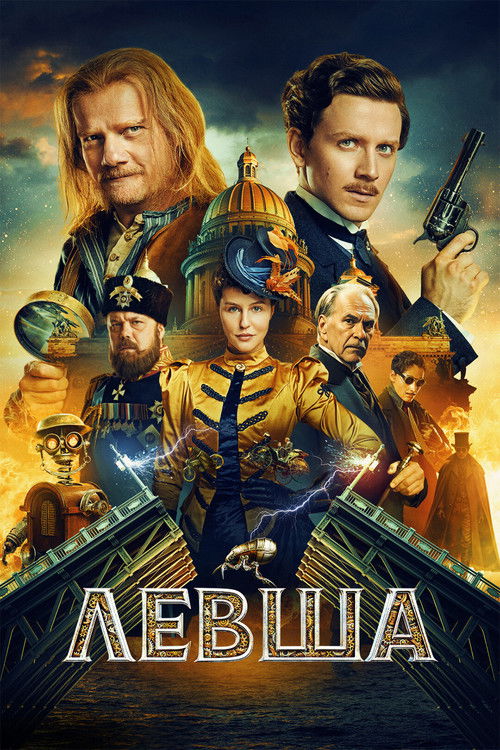
Viy remains the classic anchor, drawing on folklore, Orthodoxy, and the grotesque with an energy that still feels singular. The Queen of Spades shows the modern industry leaning back into supernatural legend for contemporary audiences. Sputnik pushes toward science-fiction horror with state paranoia in the bloodstream, while Day Watch represents the post-Soviet appetite for dark fantasy on a bigger scale.
The names to track include Konstantin Ershov, Svyatoslav Podgaevskiy, and Egor Abramenko. Russian horror matters less as a single canonical line than as a recurring site where folklore, authoritarian atmosphere, and genre revival keep colliding. Its present is still uneven, but the cultural material remains potent.
Country pages also help resist the usual funnel of horror history, where a handful of dominant industries absorb all discussion and every other cinema becomes a footnote. Reading a smaller or less exported corpus on its own terms can correct that imbalance. It can show how local censorship shaped what could be shown, how funding models pushed horror toward television, prestige, or underground practice, and how regional markets rewarded some fear-images over others. That perspective is especially valuable when the database is still growing, because it keeps the page open to future discoveries rather than freezing it around a small imported canon.
There is also a simple viewing benefit. If you arrive through a favorite subgenre, a country page can redirect your attention toward contexts you might otherwise miss. A viewer interested in supernatural narratives may discover that the films tied to a given country are less about ritual than about social breakdown; someone drawn to slashers may find almost none, yet uncover a stronger tradition of psychological horror or political nightmare. That friction is productive. It turns national browsing into criticism, not just filing, and it is one of the reasons these pages are central to how CaSTV frames horror as a living, uneven world system.
The result is a better kind of browsing: one that treats national context as an interpretive tool, not a decorative flag attached after the fact.
Trending on CaSTV




















Also explore