


Synopsis
A useless and bloody vendetta has been going on for ages between two families in this Mexican village. Men, sons, have killed each other for generations, for a so-called conception of honor in a revenge that never ends since it is also triggered by people of the village. Now, today, there are only two sons left, one in each family. One has become a doctor in the big city and his culture is modern. The other last one - of the other family - hasn't left the village and is waiting for the doctor to come "home" as he plans to kill him, to settle this war on this matter of honor once and for all. And the people of the village want blood.
The River and Death (1954) is a 1h 31min drama feature film by Luis Buñuel. A useless and bloody vendetta has been going on for ages between two families in this Mexican village.
Key facts
Crew
Trailer
Stills

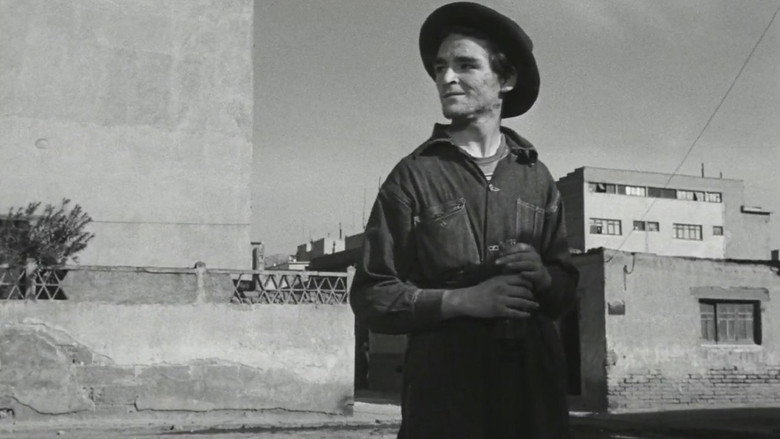
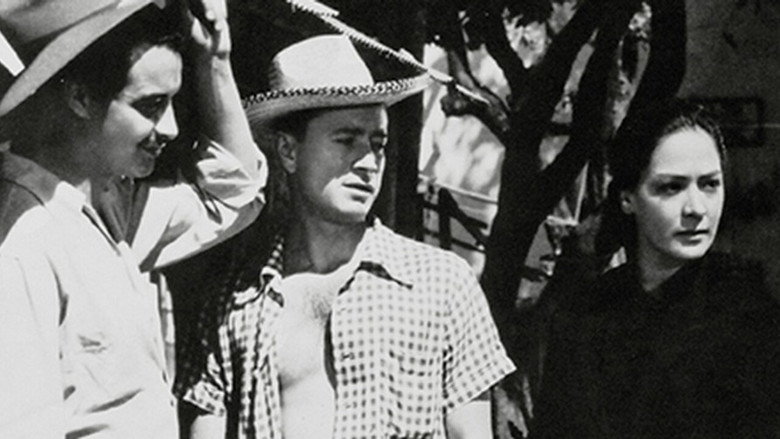
Reviews
No reviews yet. Be the first to write one.
Festival History
- Locarno International Film Festival 2023 generic
- Berlin International Film Festival 2008 generic
- Ariel Awards (Mexico) 1956 generic
- Venice Film Festival 1954 generic
Titles
| Original title | EL RÍO Y LA MUERTE | |
| Alternate title | The River and Death | |
| Alternate title | Le Rio de la mort | |
| Alternate title | Le Fleuve et la mort |
Releases & classifications
| Theatrical | Italy | August 22, 1954 |
| Theatrical | Mexico | June 30, 1955 |
| Theatrical | France | April 1, 2026 |
Full credits
| Director | Luis Buñuel |
| Cast | Joaquin Cordero, Jaime Fernandez, Columba Dominguez, Miguel Torruco, Víctor Alcocer (Polo Menchaca), Silvia Derbez (Elsa), José Elías Moreno (Don Nemesio), Carlos Martínez Baena (Padre Julián), Alfredo Varela (Chinelas), Miguel Manzano (Don Anselmo), Manuel Dondé (Zósimo Anguiano), Jorge Arriaga (Filegonio Menchaca), Roberto Meyer (Doctor), Chel López (Compadre), José Muñoz (Don Honorio), Humberto Almazán (Crescencio Menchaca), Efraín Arauz (Amigo de Crescencio (uncredited)), Fernando Yapur (Amigo de Gerardo (uncredited)), Guillermo Calles (Tomás (uncredited)), Lupe Carriles (Tía de Mercedes (uncredited)), Enrique Carrillo (Militar (uncredited)), Aurora Cortés (Comadre (uncredited)), Jesús García Navarro (Tumbao (uncredited)), Emilio Garibay (Cuñado de Filegonio (uncredited)), Amparo Garrido (Novia de Romulo (uncredited)), Cecilia Leger (Pueblerina (uncredited)), Inés Murillo (Pueblerina (uncredited)), Salvador Godínez (Pueblerino (uncredited)), Manuel Noriega (Pueblerino (uncredited)), Antonio «Pícoro» Padilla (Pueblerino (uncredited)), Ignacio Peón (Pueblerino (uncredited)), Polo Ramos (Pueblerino (uncredited)), Georgina González (Enfermera (uncredited)), Leonor Gómez (Sirvienta (uncredited)), Enedina Díaz de León (Doña Eulalia (uncredited)), Ana María Hernández (Doña Joaquinita (uncredited)), Diana Ochoa (Doña Lupe (uncredited)), Aurora Ruiz (Doña María (uncredited)), Francisco Ledesma (Tendero (uncredited)), Álvaro Matute (Joaquín (uncredited)), Nemorio Mejía (Jugador de billar (uncredited)), Alberto Pedret (Primo de Gerardo (uncredited)), José Pidal (Médico (uncredited)), Salvador Terroba (Hermano de Joaquín (uncredited)) |
| Screenplay | Luis Alcoriza, Luis Buñuel |
| Producer | Armando Orive Alba |
| Cinematography | Raul Martinez Solares |
| Editing | Jorge Busto, Jorge Bustos |
| Music | Raul Lavista |
| Production design | Gunther Gerszo |
| Sound | Rafael Ruiz Esparza |
Additional data: TMDB.
Source: Cinémathèque québécoise, linked catalogue data (CC BY 4.0)