
The Landshut Short Film Festival is one of southern Germany's most focused short film events, rooted in the Bavarian city of Landshut since its founding in 2000. Unlike the larger metropolitan festivals of Munich or Berlin, Landshut built its identity around intimate screenings in a compact medieval city, where the Trausnitz Castle looms over the old town and the surrounding architecture gives even a contemporary film programme an unusual atmospheric backdrop. That combination - modest scale, specific geography, serious curation - has made the festival a consistent presence in the German short film circuit across more than two decades of operation.
Germany has a rich short film culture fed in part by the public funding infrastructure of the Kurzfilmbüros and the regional film institutes, and Landshut sits within that ecosystem as a genuinely local event that nonetheless competes internationally for entries. The competitive programme draws submissions from across Europe and beyond, with prizes awarded to fiction, documentary, and animated shorts.
The festival is known for programming work that might be described as formally adventurous - shorts that prioritise a specific cinematic idea over conventional story mechanics. This makes Landshut a natural home for experimental work and for films that occupy the border territory between documentary and fiction. The short format rewards directors willing to take risks that a feature-length investment would make harder to justify, and Landshut's selection has tended to reflect that logic.
Genre work appears in the Landshut programme without being the festival's primary identity. Horror shorts and genre-inflected thriller pieces turn up across the years in a programme that values imagination over prestige markers. The festival is not a dedicated genre event, but its openness to unconventional material means that short horror, dark comedy, and psychological-horror films have found space in its selections. Given the strength of German genre filmmaking at the short level, this is not surprising.
Landshut as a city provides context worth noting. It is the capital of the Lower Bavaria region, historically significant as the former seat of the Duchy of Bavaria before Munich assumed that role, and its old town is among the best-preserved late-Gothic streetscapes in the country. The festival uses the city's cultural infrastructure, including the Kinoptikum cinema, as its primary venue, and the specificity of place is part of the event's character. Attending Landshut is not the same as attending a festival in a convention centre or a multiplex complex; the city is genuinely part of the experience.
The festival's operational model is lean. It runs over a concentrated weekend, which allows intensive engagement with the programme rather than the diffuse attention that longer festivals can produce. Filmmakers who attend often cite the accessibility of the team and the quality of post-screening discussion as distinguishing features. For emerging German and European short filmmakers, Landshut represents a real opportunity to show work in a context where it will be seen carefully.
Competition categories have evolved over the festival's history to reflect changing production realities. The rise of digital production lowered barriers to short filmmaking considerably in the 2000s and 2010s, which expanded the pool of submissions and introduced the curation challenges common to all festivals in this period. Landshut responded by sharpening its selection criteria rather than expanding its programme to accommodate volume, a choice that has preserved the festival's coherence as a curated event rather than a showcase of everything submitted.
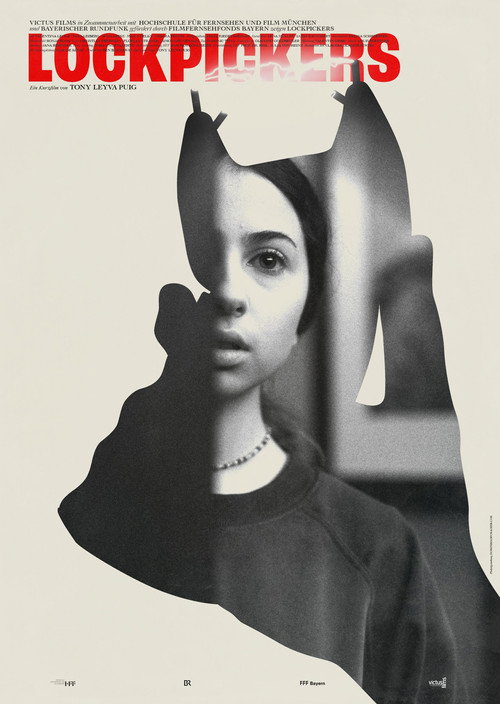
German short film production has strong roots in the film schools of Munich and elsewhere in Bavaria, and the Landshut festival serves as a regional outlet for that school-connected work alongside independent productions. The relationship between film education and the festival circuit is close in Germany, and Landshut participates in that ecology in a way that the larger festivals - which are more oriented toward international acquisitions and industry functions - often cannot.
For the short film community in Bavaria and across southern Germany, Landshut occupies a specific and useful position: a festival small enough to be personal, rigorous enough to carry curatorial credibility, and rooted enough in its location to feel like a genuine cultural event rather than a traveling programme that could be held anywhere.
 Sitges - Catalonian International Film Festival
  FilmQuest
  Fantaspoa International Fantastic Film Festival
  Fantasia International Film Festival