
The Cartagena Film Festival, founded in 1960 as the Festival Internacional de Cine de Cartagena de Indias (FICCI), is the oldest continuously running film festival in Latin America, predating by decades the major regional events that now rival it in prestige.
Held each March in Cartagena de Indias, a walled colonial city on the Caribbean coast of Colombia, the festival has operated through political turbulence, economic crises, and significant cultural shifts without breaking its annual continuity. That longevity is itself a historical document: FICCI has been running since the era of Colombian cinema's first serious industrial efforts, and its archive of programming decisions tracks the evolution of Latin American film culture across six decades.
The festival's founding context was the tail end of Colombia's own classic studio period and the beginning of Latin American cinema's new-wave ferment. In the 1960s, festivals were among the primary mechanisms through which filmmakers across the continent encountered each other's work and began to develop the theoretical and aesthetic conversations that would produce the Cinema Novo movement in Brazil, the Nuevo Cine Latinoamericano across the region, and the political cinema of the following decade. FICCI participated in that exchange from its earliest editions.
The competitive program is structured around Ibero-American cinema - Spanish, Portuguese, and Latin American productions - with a particular emphasis on Colombian national cinema. The Golden India Catalina, the festival's main award, takes its name from a specific historical figure: La India Catalina was an indigenous woman who served as interpreter for Spanish conquistador Pedro de Heredia during the founding of Cartagena, and her image, based on a monument erected in the city, is the festival's visual signature. The award is a serious institutional recognition within the Latin American industry.
Cartagena has historically included genre and popular cinema within its program, reflecting the reality that Latin American cinema has never had a clean separation between prestige art film and genre production. Thriller, horror, and crime films from across the Spanish-speaking world have screened alongside the auteur cinema that generates critical attention. Colombian genre cinema itself, though less internationally prominent than the country's literary and music traditions, has received dedicated programming.
The festival's location in Cartagena is inseparable from its identity. The city's UNESCO-listed historic center, its fortifications, its Caribbean heat, and its mixture of African, indigenous, and Spanish cultural inheritance give the event an atmosphere that no inland or northern city could replicate. Screenings in the Teatro Adolfo Mejia, an 1838 opera house that has been restored multiple times, are among the more memorable theatrical experiences on the Latin American festival circuit.
The industry component of FICCI has grown in recent decades. A co-production market and a documentary lab have been added alongside the main competition, and the festival has developed relationships with European co-financing bodies that have facilitated the international circulation of Colombian films. This infrastructure reflects the growth of Colombia's film industry since the passage of the Film Law in 2003, which established a fund supporting national production.
The festival has also dedicated programming to Colombian popular culture, including music films and documentaries that engage with cumbia, vallenato, and the coastal Afro-Colombian traditions that give Cartagena much of its cultural character. These programs exist alongside the international competition without contradiction, reflecting the festival's long-standing refusal to separate high culture from vernacular entertainment.
For the CaSTV database and its focus on genre cinema broadly defined, FICCI is significant as a source of Latin American thriller, crime, and horror titles that have screened with institutional validation in a context where such films are seen as legitimate participants in a serious film culture rather than commercial concessions. The festival's age and its location in one of South America's most atmospherically distinctive cities make it an irreplaceable part of the regional film landscape.
 Berlin International Film Festival
  International Film Festival Rotterdam
 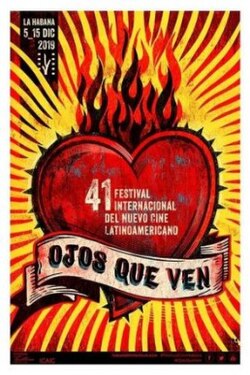 Havana Film Festival